Scored for wooded terrain
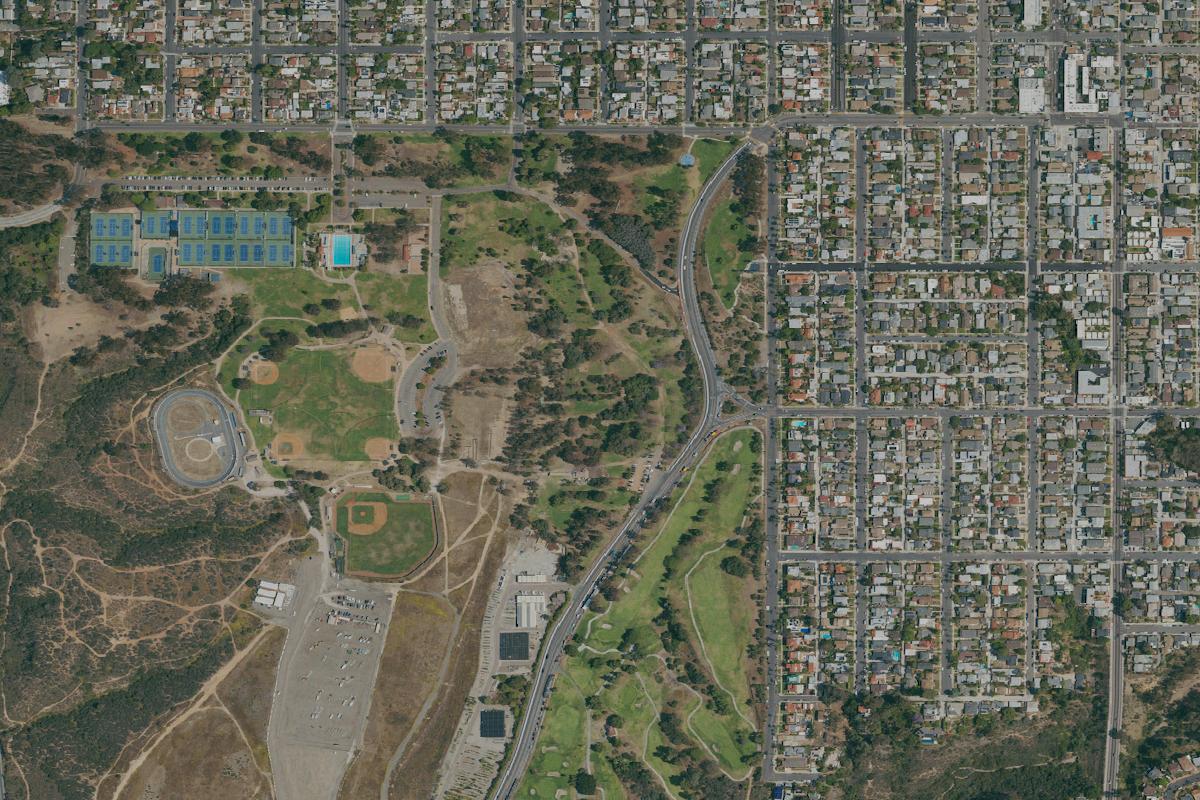
Morley Field's course runs through the northeast section of Balboa Park, on a strip of ground between Pershing Drive and the North Park neighborhood — land that was once a city dump, with methane still under it. San Diego acquired the original layout from Ed Headrick's Disc Golf Association in 1977, the city and Wham-O splitting the $5,000 design fee. When the city pulled the baskets during restroom construction, Snapper Pierson put them back in himself, was named course pro, and started selling discs out of his car; by 1979 the city let him run a small shop out of the back of the restroom storage building, and he has operated the course ever since. He was voted into the Disc Golf Hall of Fame in 1994.
The course has been rebuilt several times as discs got faster. It now plays 19 holes with concrete tees, Mach III baskets, 122 pin positions and 32 irrigation clocks, plus benches and safety netting where the layout runs close to houses. It is not especially long, but it is tight — mature trees frame most of the lines and the pin placements are unforgiving. Positions rotate every Monday and each hole has three to six of them, so the course reads differently week to week. This is pay-to-play: an all-day band is $6 weekdays and $8 weekends and holidays, rental discs are $2.50, and the band has to be worn where staff can see it. Open sunrise to sunset every day except three tournament weekends — the Southwestern Disc Golf Invitational, the Course Championships, and the Spring Fling in May.
Be the first to review Morley Field
Two minutes. Helps others pick the right course.